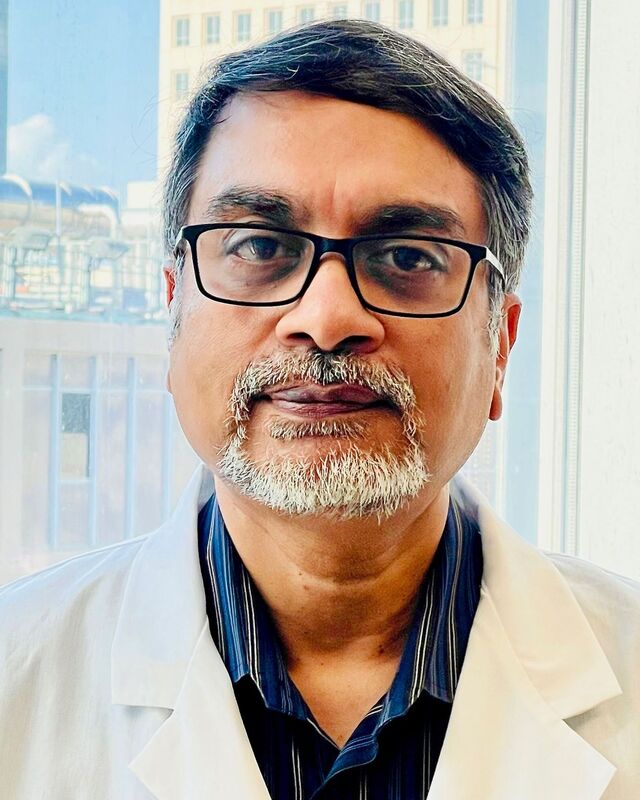
Dr. Rajagopal Sekhar, MD, is an Associate Professor of Medicine at Baylor College of Medicine and a renowned expert in nutrient metabolism, mitochondrial energetics, and geriatric endocrinology. With over three decades of clinical and research experience, Dr. Sekhar leads a pioneering translational research program dedicated to understanding the metabolic mechanisms that drive human health and disease. He is widely recognized for his breakthrough discovery that glutathione deficiency is a primary driver of mitochondrial impairment in aging, HIV, and diabetes. This work led to his laboratory’s development of glycine and N-acetylcysteine, a nutritional intervention shown to correct mitochondrial dysfunction and reverse key hallmarks of aging in clinical trials.
As a primary investigator on multiple NIH R01 grants, Dr. Sekhar’s current research focuses on the metabolic basis of Alzheimer’s disease and the role of cellular health in recovery from acute illnesses like COVID-19. His approach bridges the gap between basic science and clinical application, utilizing stable isotope techniques and physiological modeling to translate mechanistic insights into tangible therapeutic outcomes. Beyond the laboratory, Dr. Sekhar is a board-certified endocrinologist at Ben Taub Hospital and Baylor St. Luke’s Medical Center, where he is known for his "ABCDE" education model, which simplifies complex diabetes management for underserved and high-risk patient populations.
A committed educator and interdisciplinary collaborator, Dr. Sekhar is an active mentor to the next generation of physician-scientists and has been repeatedly honored for his contributions to clinical and basic science research. His philosophy of precision and focus extends into his personal passion for nature photography, a pursuit that has been featured by national media outlets and one that he credits with sharpening his perspective on scientific observation. Through his combined leadership in research, patient care, and mentorship, Dr. Sekhar will contribute as Co-Investigator in the Biomarker Core with expertise in neuroendocrinology, in particular in metabolic studies and oxidative stress.